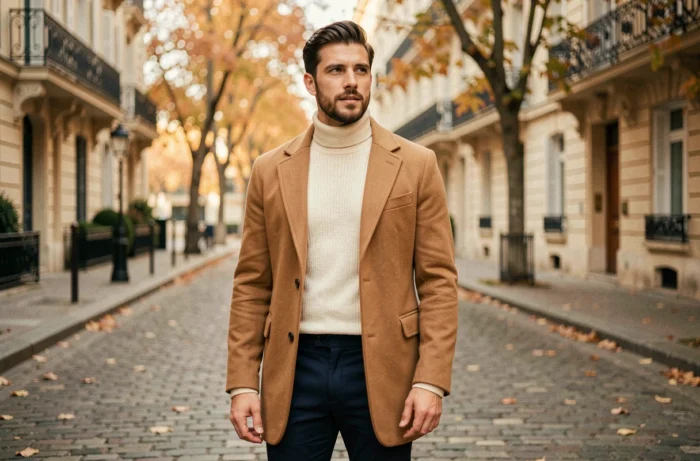
Men’s fashion is going through a period of tension between two contradictory discourses. Fashion shows celebrate the return of tailoring and structured silhouettes, while market data points to a different reality: men’s fashion volumes are stagnating or even declining in Europe, hindered by inflation and pressure on purchasing power. Understanding current men’s fashion trends requires navigating between these two realities.
Second-hand and capsule collections: what really shifts the menswear market
Fashion-inspired articles focus on pieces and looks. They often overlook the structural movements that are redefining how men buy their clothes.
The second-hand market is experiencing rapid growth in the male segment. In the UK, second-hand clothing occupies a central place in the circular fashion sector, driven by consumers concerned about their environmental impact. Several major brands are integrating resale into their own distribution channels, a shift that would have seemed unlikely a few years ago.
At the same time, premium capsule collections are replacing the volume logic on basics. Limited drops, short series, and one-off collaborations are taking precedence over the constant renewal of entry-level pieces. The dominant discourse in menswear is becoming “invest in good pieces” rather than multiplying purchases. Resources like mister-tendance.fr help track these developments and identify pieces that endure over time.
This shift has concrete consequences for the male wardrobe:
- Less volume purchased, but pieces chosen with more care, often at a higher unit price
- Increased attention to materials (wool, linen, full-grain leather) rather than logos or fleeting trends
- Growing interest in the traceability of clothing, including in the second-hand market
Casual tailoring for men: the silhouette that stands out without a tie
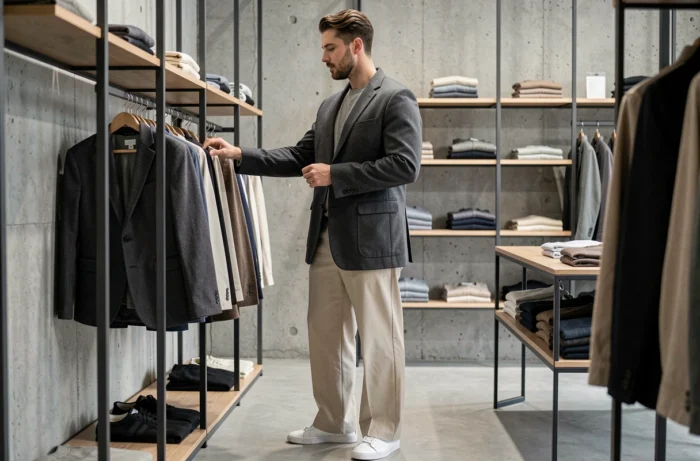
Tailoring is making a comeback, but not in its rigid version from the 2010s. The suits presented by designers for recent collections share a common trait: clean lines combined with fluid and lightweight materials. Shoulders remain natural, trousers gain in volume, and the fabric moves with the body.
What distinguishes this wave of tailoring from previous ones is its systematic association with casual pieces. The blazer is worn over a knit t-shirt rather than a dress shirt. Suit trousers are paired with dress sneakers or soft loafers. The tie, while it reappears on some runways, remains marginal in daily practice.
The sport coat worn without a specific occasion perfectly encapsulates this trend. It is no longer reserved for the office or events. It becomes a layering piece, on par with a jacket or overshirt, worn on weekends with jeans or cargo pants.
Trendy colors and materials for men: beyond beige and black
The masculine palette is evolving in two seemingly opposite directions. On one side, natural neutrals dominate functional wardrobes: beige, camel, stone gray, chocolate brown. These shades prevail because they combine easily and transcend seasons without appearing dated.
On the other hand, vibrant colors like burgundy, deep green, and saturated navy blue are gaining ground on strong pieces. Khaki, identified as a trendy color for several seasons, is appearing on cargo pants, utility jackets, and overshirts.
Brown leather and textured materials
Brown leather (no longer exclusively black) is asserting itself on jackets, belts, and shoes. Shearling or sherpa finishes on jacket collars regularly return in autumn-winter collections. Chunky knits, crumpled linens, and raw denims bring a tactile dimension that smooth synthetic materials cannot replicate.
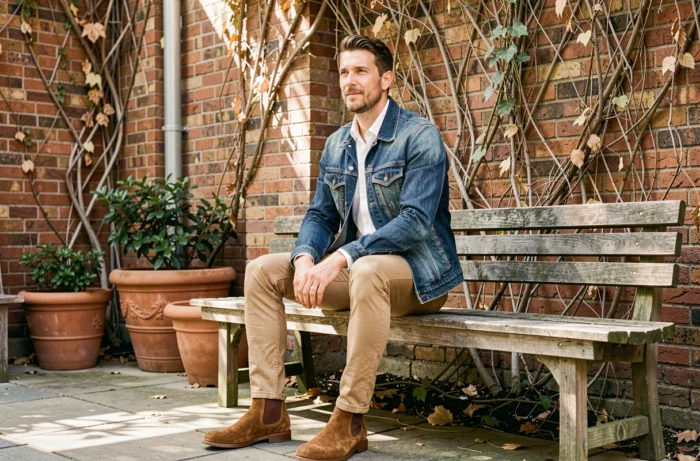
Texture is as important as color in a successful outfit. A monochrome beige look becomes interesting when it mixes slightly crumpled linen, brushed cotton, and reversed leather. It is this play of materials, more than the accumulation of flashy pieces, that distinguishes a well-crafted silhouette from a generic assembly.
Minimalist men’s wardrobe: building a lasting wardrobe
The logic of a “capsule wardrobe” for men is gaining relevance in a context where prices are rising and collections are renewing faster. Rather than chasing every trend, a more sustainable approach is to build a foundation of versatile pieces.
- An unstructured blazer in lightweight wool, wearable from spring to autumn, with jeans or dress pants
- Two or three shirts in natural materials (linen, oxford cotton, flannel depending on the season) that work open over a t-shirt or buttoned alone
- A pair of brown leather shoes with a midsole, neither too dressy nor too casual, that covers most situations
- A well-cut cargo pant (not too wide, not too technical) that replaces the classic chino for a more current style
This approach does not mean giving up on trends. It involves choosing trendy pieces that integrate into an existing wardrobe rather than those that require a complete outfit around them. A plaid flannel overshirt, for example, works as an intermediate layer for several seasons.
A high price does not always guarantee better longevity. Checking the fabric density, the quality of the seams, and the sturdiness of the buttons remains more reliable than relying on a brand’s pricing position.
Men’s fashion in recent seasons rewards those who take the time to choose. Fewer pieces, better selected, worn longer: this logic of a streamlined wardrobe holds because it absorbs trend variations without imposing a complete renewal.