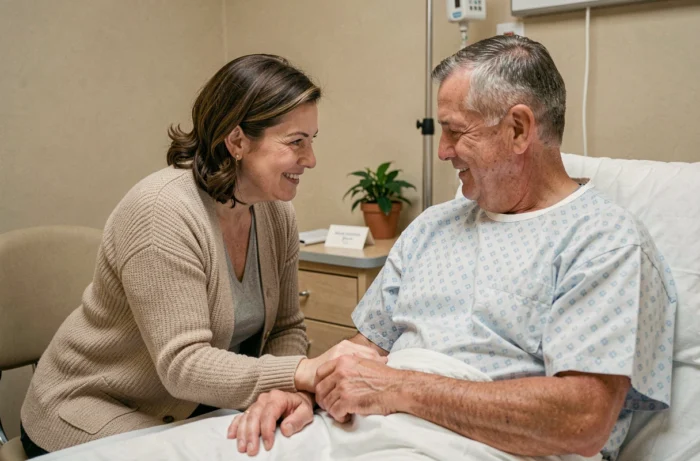
A friend informs you of their hospitalization date. You want to write something to them, but every phrasing sounds off or too light. The classic reflex, the “everything will be fine,” comes from a good intention, but it can cut short what the person is truly feeling. Writing a comforting message before a surgical operation requires a bit more thought than a simple courtesy text.
Validate the emotion before reassuring: the reflex that changes everything
We tend to want to reassure immediately. “Don’t worry,” “it will be okay,” “you are in good hands.” These phrases are sincere, but they minimize the other person’s concern. The person who is about to undergo surgery likely knows that the medical team is competent. What they need is for someone to acknowledge that preoperative anxiety is a normal reaction.
Resources in psychological support agree on this point: validating emotions is more effective than minimizing them. A phrasing like “I see that this is a stressful time for you, and that’s normal” opens up space. It tells the other person that their feelings matter, without reducing them to a problem to be solved.
When writing a message before surgery, the first sentence should acknowledge what the person is going through, not project them directly into the aftermath. The order matters: first listen (even in writing), then encourage.

Support message before surgery: offer concrete help rather than a vague formula
The phrase “don’t hesitate if you need anything” is a classic. It comes from a good sentiment, but it shifts the mental burden onto the hospitalized person. It’s up to them to articulate a need, to ask, to follow up. However, in a context of anxiety related to a surgical procedure, this process represents an additional effort.
Offering specific help reduces the patient’s mental burden. There is a clear difference between “let me know if you want something” and “I’ll drop off a meal at your place on Tuesday evening, does that work for you?”. The second phrasing only requires a yes or no.
Here are some examples of concrete help to include in a message:
- Offer to take care of a specific household task (groceries, mail, watering plants) during recovery
- Offer to drive the person to a post-operative follow-up appointment or pick them up from the clinic
- Prepare a meal or a series of dishes to freeze for the first days of recovery
This type of proposal shows a real commitment. The message shifts from passive sympathy to active support, and that’s what stays in memory.
Writing a courage SMS: the right format and common mistakes
The format of the message matters as much as the words. A text sent the night before the operation does not have the same impact as a long message received three days prior. The night before or the morning of, a short and warm message has more impact than a twenty-line text.
The ideal length for a message before surgery
Two to four sentences are sufficient. The person is often in a preparation phase (fasting, last exchanges with the care team, managing their own anxieties). A message that is too long can become an additional source of stimulation at the wrong time. Get to what matters: acknowledgment of the situation, a word of support, and possibly a concrete proposal for what comes next.
Formulations to avoid in a message before surgery
Some phrases come from a good intention but have the opposite effect. “I was also operated on and everything went well” shifts the focus back to you. “You’ll see, it’s nothing at all” trivializes the ordeal. And comparisons with more serious cases (“there are worse things”) have never reassured anyone.
- Avoid recounting anecdotes of operations that went wrong, even to “prepare” the person for the worst
- Do not send links to articles detailing the risks of the procedure
- Avoid injunctions to positivity (“be strong,” “keep smiling”) that deny the right to worry
- Do not send multiple messages in the same day, one well-formulated text is better than ten notifications
Accompanying beyond the message: presence and availability before the intervention
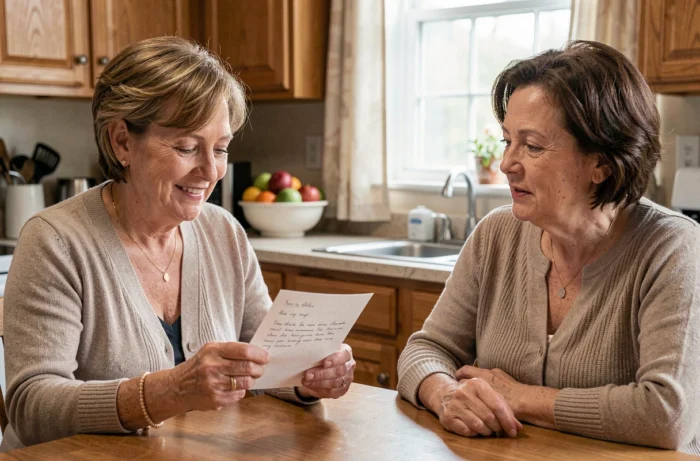
Support is not limited to words. A support guide for loved ones reminds us that calm presence and availability matter just as much as the content of the message. If you can be there physically before or after the intervention, simply say so in your text. “I will be there when you leave” or “I’ll call you tomorrow evening when you feel ready” anchors your support in reality.
One often overlooked aspect: helping the person prepare their questions for the medical team. Preoperative anxiety decreases when the patient feels informed. Offering to list questions together about anesthesia, postoperative follow-up, or recovery duration can be more soothing than a courage message.
Feedback varies on this point depending on the individuals and contexts, but the principle remains the same: support rooted in concrete actions reassures more than words alone. The best message is one that makes the other feel that they are not facing this step alone, and that your presence will not stop with the sending of a text.
One last practical point: also think about the message afterward. Sending a note on the day of discharge or a few days later to check on their recovery extends support beyond the critical moment. It is often in the recovery phase, when the attention of loved ones wanes, that the operated person feels the most isolated.