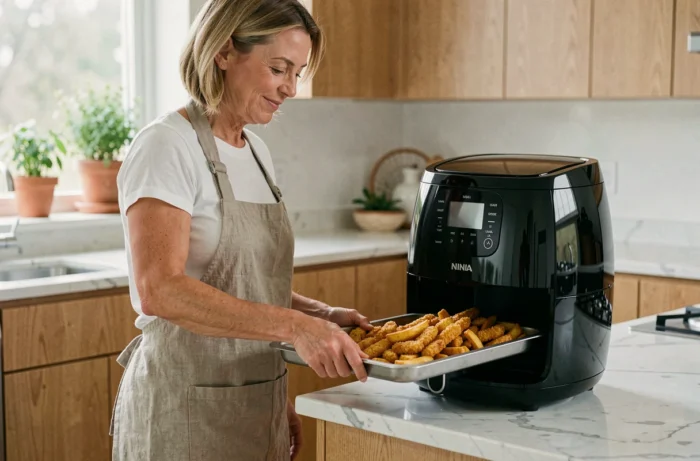
A Ninja air fryer works by rapid convection: a fan pulses hot air at high speed around the food, creating a crust comparable to traditional frying with minimal oil. When we talk about “revisiting a classic dish” with this device, the real challenge is not finding a recipe, but understanding how a generic PDF translates into a concrete result in your kitchen.
The settings vary depending on the Ninja model used, the size of the basket, and the nature of the ingredients.
Oven-to-air fryer conversion: what the PDF doesn’t always specify
Most recipe PDFs apply a rough rule: lower the temperature by 10 to 20 °C compared to a traditional oven and reduce the cooking time by about one third. This approximation works for simple preparations like roasted vegetables or nuggets.
It becomes insufficient as soon as the dish involves a layering of ingredients or a sauce. A gratin dauphinois, for example, does not cook the same way in a perforated basket as it does in a closed baking dish in the oven. The air circulates differently, moisture evaporates faster, and the top layer risks burning before the center is cooked.
A well-designed Ninja air fryer recipe book in PDF details these adjustments recipe by recipe, with indications on the type of container to use and when to cover with aluminum foil to slow browning.
Three parameters deserve special attention when adapting a classic:
- The amount of liquid in the recipe: a braised dish loses its water much faster in an air fryer than in the oven, which concentrates flavors but can dry out the preparation if the time is not shortened.
- The portion sizes: an overloaded basket blocks air circulation and produces uneven cooking. It’s better to cook in two batches than to stack.
- Preheating: some Ninja models reach their target temperature in just a few minutes, which changes the total time calculation compared to a traditional oven that takes longer to heat up.
Air fryer cooking techniques for classic French dishes
Recent recipes published in guides dedicated to air fryers no longer just list ingredients and cooking times. They incorporate techniques borrowed from professional cooking, adapted to the constraints of the device.
Marinade and velveting before cooking
Velveting involves coating a protein (chicken, pork) with a mixture of cornstarch and egg white before cooking. This technique, common in Chinese cuisine, works remarkably well in an air fryer because the dry, rapid heat sets the coating in just a few minutes, creating a texture that is tender inside and crispy outside.
For a classic like breaded chicken, this method advantageously replaces deep frying. The prior marinade (at least thirty minutes in the refrigerator) allows the spices to penetrate the meat, compensating for the lack of an oil bath.
Layered cooking and batch management
A double-drawer Ninja air fryer allows you to cook two preparations simultaneously at different temperatures. This feature is a game-changer for a complete meal: vegetables in one compartment, protein in the other.
Layered cooking requires placing the densest ingredients at the bottom, closest to the heating element. Thin vegetables or herbs go on top, added during cooking to prevent burning. No generic PDF can anticipate the exact density of your ingredients, hence the usefulness of a probe thermometer to check internal temperature.
Classic pastries in the Ninja air fryer: pitfalls to avoid
Adapting a pastry to the air fryer is where failures are most common. The reason lies in moisture management. A traditional oven maintains a relatively humid environment due to its enclosed volume. The air fryer, on the other hand, continuously expels moisture.
A classic yogurt cake, cooked carelessly in an air fryer, results in a thick, dry crust with a still-raw center. The solution is to reduce the cooking temperature and cover the mold during the first two-thirds of the time, then remove the cover to allow the surface to brown.
Recipes like chocolate fondant or moist cakes adapt better than yeast doughs, because their structure does not depend on a long rise in a humid environment. Choux pastry, on the other hand, remains a challenge: their development requires an initial steam that the air fryer does not naturally produce.
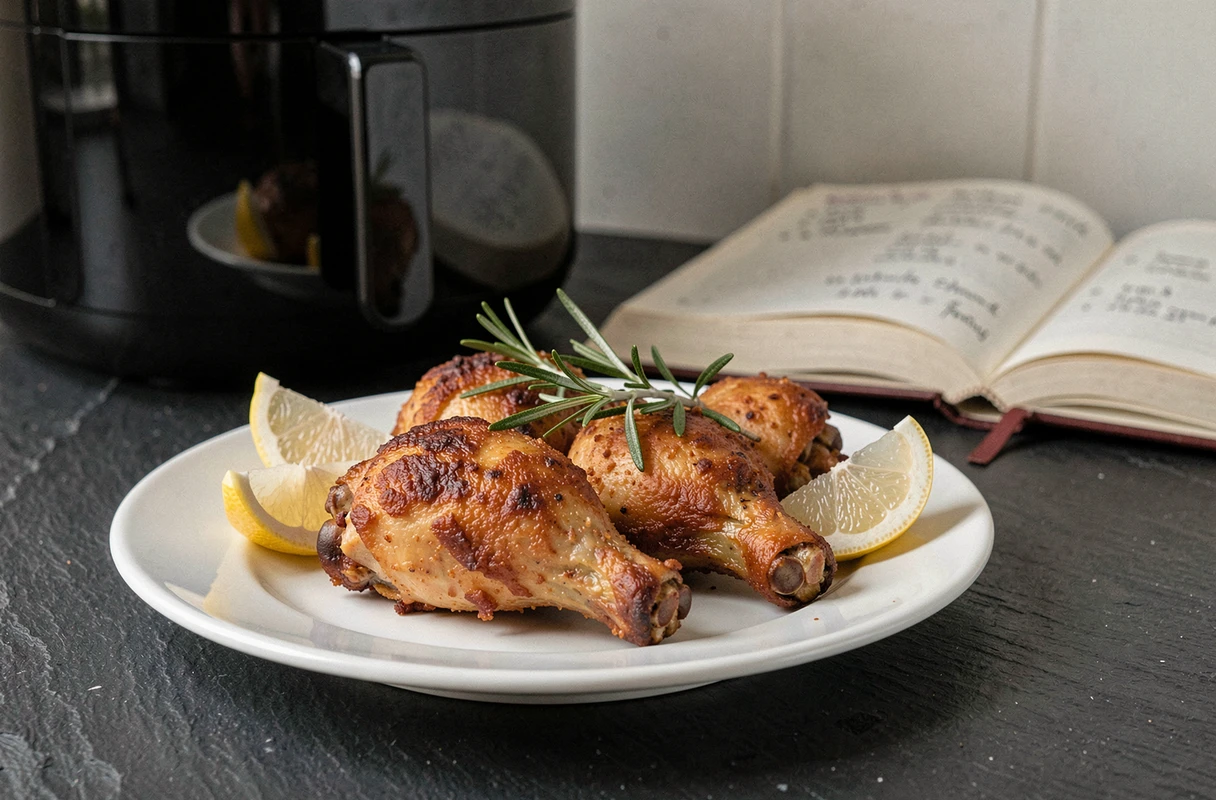
Building your own conversion guide from a Ninja PDF
Rather than blindly following the times indicated in a downloaded file, the most reliable method is to note your own adjustments after each trial. A PDF serves as a starting point, not an absolute reference.
Create a sheet for each recipe with three columns: the PDF parameters, those you actually used, and the result obtained. After a few weeks, you will have a reference calibrated to your specific Ninja model, your altitude, and your cooking preferences.
Francophone communities around the Ninja Foodi regularly share their feedback on settings, allowing you to cross-reference your observations with those of other users of the same device. These exchanges complement the official booklets, whose indications remain intentionally broad to cover multiple models.
The often-overlooked point in PDF guides is maintenance between cooks. A basket clogged with greasy residues alters air circulation and skews subsequent cooking times. Cleaning the basket and heating element after each intensive use is not a superfluous hygiene tip; it is a condition for your conversion parameters to remain reliable from one time to the next.