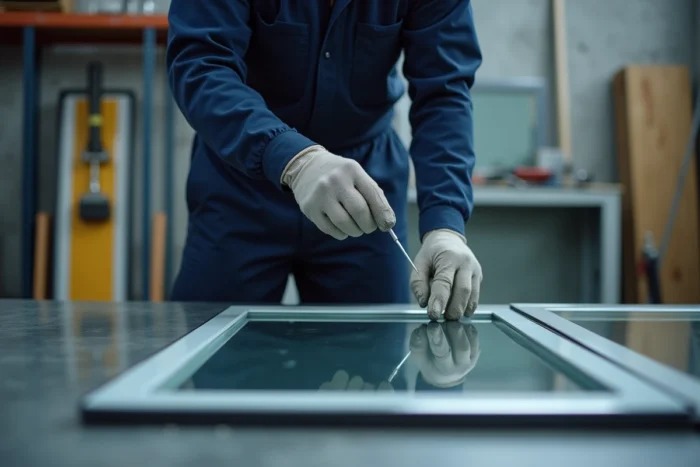
The regassing of double glazing on-site is an operation that the glass industry considers outside the normal industrial process. The gas tightness of an insulating glazing unit (IGU) is achieved and controlled in the factory, under pressure, temperature, and cleanliness conditions that are impossible to replicate on-site. Here, we detail the real technical constraints, the limits of regassing, and reliable alternatives.
IGU Tightness: Why On-Site Regassing Does Not Last
An effective IGU relies on a double peripheral seal (butyl as the first barrier, polysulfide or structural silicone as the second barrier) applied in a controlled atmosphere. This sealing system guarantees an extremely low gas leakage rate over the lifespan of the glazing.
Drilling an IGU to reinject argon destroys the first butyl barrier at the drilling point. Hand sealing, regardless of the sealant used, does not restore the original tightness. We consistently observe an accelerated loss of gas in the months following this type of intervention.
According to Forel, a manufacturer of IGU production lines, performance relies on units sealed under controlled conditions, with industrial leakage tests. On-site spot regassing is not covered by any manufacturer warranty or standardized protocol in residential settings.
When a professional offers to put gas back in a double glazing, it actually involves the complete replacement of the IGU in the existing frame, not just a simple recharge like inflating a tire.
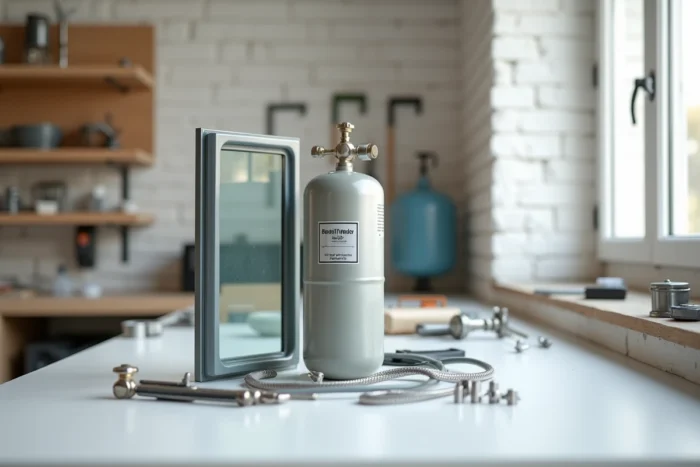
Argon, Krypton, and Xenon Gas: Which Filling for Which Thermal Insulation
The choice of filling gas directly determines the Ug coefficient of the glazing. Argon remains the standard in residential applications for its performance/cost ratio. Krypton and xenon offer lower thermal conductivities, but at prices that are incomparable.
- Argon: thermal conductivity about 67% that of air, available in large quantities, marginal cost on the price of a new IGU. It is the gas used in the vast majority of residential double glazing.
- Krypton: lower thermal conductivity than argon, relevant in triple glazing with thin layers where the spacer space is reduced. Its high price limits it to high energy performance projects.
- Xenon: the best gaseous insulator among the three, but its cost confines it to very specific applications (passive buildings, technical laboratory glazing). Rarely justified in regular renovations.
A standard argon glazing in a 4/16/4 configuration with a low-emissivity coating achieves a Ug significantly lower than that of double glazing filled with dry air. Argon only justifies a significant additional cost when combined with a low-e coating: without surface treatment, the thermal gain from the gas alone remains modest.
Filling Rate and Natural Loss
At the factory exit, the argon filling rate is generally around 90%. European standards allow for a gradual loss over the lifespan of the glazing. As long as the rate remains above a certain threshold, thermal performance remains acceptable.
Gas leakage is not a defect in itself. It is a normal physical phenomenon related to the residual permeability of the seals. A glazing that loses its gas prematurely indicates a sealing defect, not a need for regassing.
Fogged Double Glazing: Diagnosis Before Intervention
Fogging between the two panes is the most visible symptom of a failing IGU. It indicates that humid air has entered the cavity, meaning that the peripheral seal has failed. At this stage, the insulating gas has already largely escaped.
We recommend a three-step diagnosis before any decision:
- Check if the condensation is interior (room side), exterior (street side), or interstitial (between the two panes). Only interstitial condensation confirms a breach of the IGU’s tightness.
- Examine the condition of the frame and the beads. A well-maintained aluminum or PVC frame allows for the replacement of the glazing alone, without removing the entire window.
- Assess the age of the glazing. Beyond fifteen to twenty years, replacing the IGU is almost always more rational than attempting a repair.
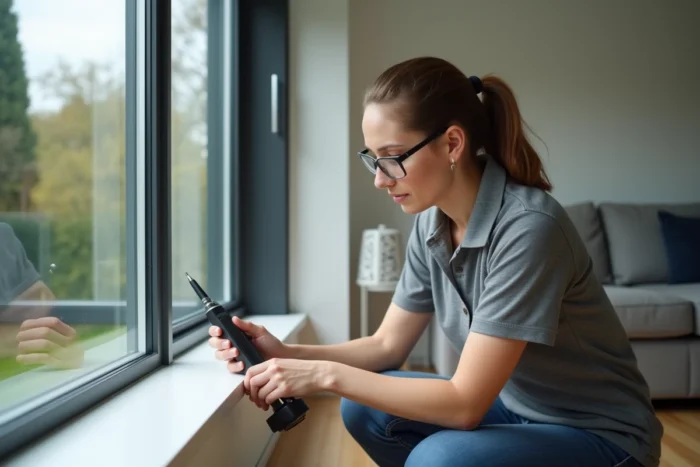
Replacing the Glazing Without Changing the Window
The most common solution is to replace the IGU in the existing frame. A glazier removes the beads, takes out the old glazing, and installs a new IGU made to exact specifications. The operation usually takes less than an hour per window.
This approach preserves the carpentry (notable savings in renovation) while restoring the original thermal performance, or even improving it if the old glazing did not have a low-emissivity coating or argon gas.
Cost of Replacing an Argon IGU and Pitfalls to Avoid
The cost of replacing an IGU depends on the dimensions, the type of glazing ordered (low-e coating, solar control, laminated), and local labor costs. Generally, replacing just the glazing is significantly cheaper than changing the entire window.
Beware of low-cost “regassing” offers. No French standard recognizes this operation in residential settings. Serious companies do not offer to recharge a drilled glazing: they replace the IGU.
Always request the technical sheet of the installed glazing (Ug value, type of gas, thickness of the panes, nature of the low-e coating) to verify that the service matches the quote. An “argon” glazing without the manufacturer’s certification is worthless in terms of warranty.
Replacing the IGU remains the only method that combines restoration of thermal insulation, manufacturer warranty on tightness, and compliance with regulatory requirements. Any other approach is merely palliative, with uncertain lifespan and no coverage in case of damage.