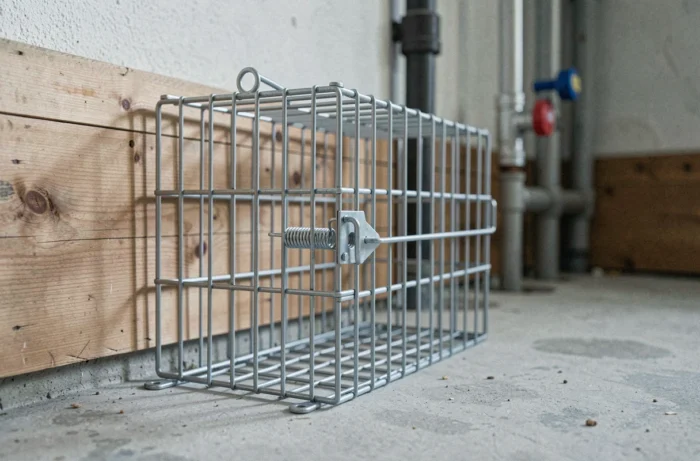
The stone marten is among the animals classified as ESOD (species likely to cause damage) in about sixty French departments. For an individual faced with nighttime noises in the attic or chewed cables under the hood, purchasing a cage trap seems to be the most straightforward solution. The reality is more nuanced: the regulatory framework varies from one department to another, and not all traps sold in DIY stores are suitable for every situation.
Cage trap for stone marten: what the ESOD 2026 framework changes concretely
The new triennial ESOD decree, published after several months of regulatory uncertainty, reintroduces the stone marten into the regulation system. Between the expiration of the previous decree and the publication of the 2026 text, several departments found themselves without a legal basis for trapping. This period of uncertainty led to the temporary suspension of trapping operations in certain areas.
The same model sold legally in stores cannot be used in the same way everywhere in France. The legality depends on the department and the type of terrain, with distance constraints from buildings (trapping often limited to less than 250 m from a building or farm).
Before making a purchase, consulting the current prefectural decree in your department remains a prerequisite that buying guides often overlook.
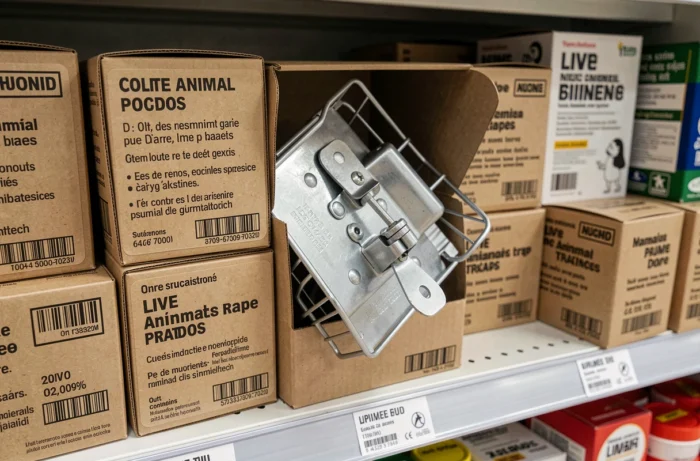
To compare available models, a detailed comparison of each stone marten trap at Brico Dépôt allows you to verify the compliance of the non-lethal cage traps offered in-store.
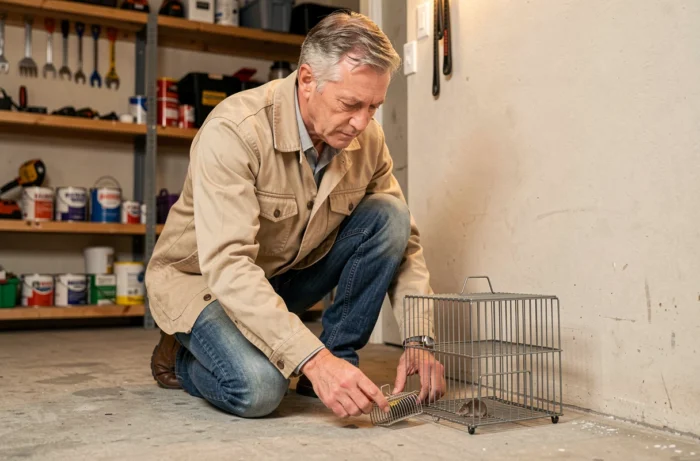
Technical criteria for a cage trap suitable for attics and lofts
Non-lethal cage traps are the only ones usable without a trapping permit in most situations. Their effectiveness depends on often underestimated parameters.
Dimensions and materials of the cage
The adult stone marten measures between 40 and 50 cm long (including the tail). A cage that is too short makes the animal wary of the entrance. Galvanized steel models resist corrosion better in humid environments like poorly ventilated attics. The mesh must be dense enough to prevent the stone marten from biting the wires and injuring itself, which would pose an animal welfare issue and complicate release.
Trigger mechanism
A central paddle system remains the most reliable for this type of capture. The animal steps on the paddle while moving toward the bait, which closes the door behind it. Tensioned wire mechanisms are less predictable: the agile and wary stone marten can bypass the device or trigger the closure without being trapped.
Check that the door locks automatically. A panicked stone marten exerts significant pushing force, and a faulty locking system can lead to a quick escape.
Trigger sensitivity
If too sensitive, the trap closes at the slightest draft or mouse passage. If not sensitive enough, the stone marten grabs the bait and leaves. Models with adjustable sensitivity offer a concrete advantage for adapting the trap to the weight of the targeted animal. This option is not available on all entry-level models.
Baits and trap positioning: common mistakes
The choice of bait is as crucial to success as the quality of the trap itself. Field reports vary on this point, but certain baits consistently prove effective:
- An entire egg, placed at the bottom of the cage, exploits the stone marten’s natural attraction to nests. A broken or pierced egg emits a stronger odor that accelerates detection
- Fresh grapes or other sweet fruits. The stone marten is omnivorous and attracted to sugars, an aspect often overlooked in guides that focus solely on meat-based baits
- Raw poultry pieces, particularly in cold periods when food resources become scarce
The positioning of the trap is as important as the bait. The stone marten follows regular paths along walls, beams, and gutters. Placing the trap on an identified passage (paw prints, droppings, claw marks) increases the chances of capture compared to random placement in the center of an attic.
A common mistake is handling the trap with bare hands. The stone marten has a keen sense of smell and can avoid an object that carries a strong human scent. Wearing gloves during installation and bait handling reduces this risk.
Release and sustainable alternatives to repetitive trapping
Capturing a stone marten does not solve the problem if access points to your home remain open. The released animal (at a suitable distance, in an appropriate environment) will be replaced by another individual within weeks if the territory remains attractive. Prevention is more sustainable than repeated trapping.
Priority entry points to inspect:
- Ventilation openings under the roof, often lacking mesh or equipped with too loose a mesh. A fine steel mesh prevents intrusion without blocking air circulation
- Connections between the roof and the gutter, where a few centimeters of space is enough for the stone marten to slip through
- Unsealed technical conduits and cable passages, which serve as corridors between the outside and the attic
Ultrasonic repellents are sometimes presented as a complementary solution. The available data does not allow for conclusions about their long-term effectiveness: some users report a temporary deterrent effect, while others observe rapid habituation of the animal.
Spot trapping remains useful in emergencies, especially when a stone marten has already taken up residence in your attic and is causing active damage. However, a strategy of systematic sealing of access points after capture transforms a one-time operation into a lasting solution. Without this step, the trap ends up functioning in a loop, season after season, without ever addressing the root of the problem.