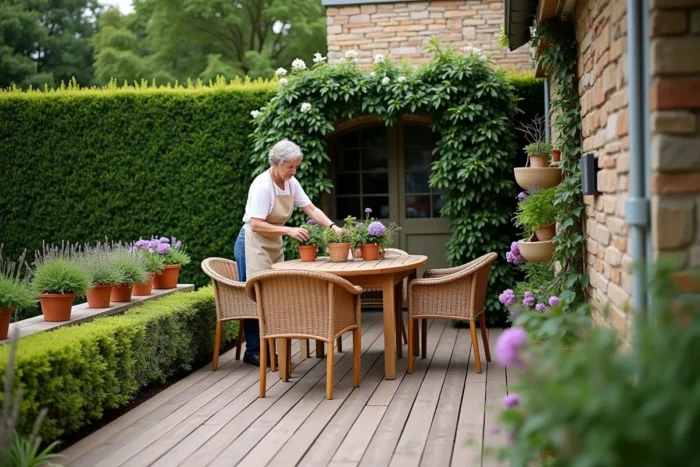
A garden that functions well on a daily basis relies less on the choice of plants than on how the space is divided and connected. Before choosing a terrace covering or a variety of climbing plants, the fundamental question concerns the structure: orientation of the land, shaded areas at the end of the day, natural paths between the gate and the front door.
Establishing these foundations prevents having to redo an outdoor layout two years later because a path leads in the wrong direction or a flowerbed blocks the view from the kitchen.
Regulatory zones of the PLU and outdoor layout
Have you ever considered installing a garden office, a small studio, or a covered shelter in your outdoor space? The first thing to check is neither the price nor the style, but the zone of your PLU (local urban planning plan).
A garden studio is prohibited in natural (N) and agricultural (A) zones of the PLU, except for very specific exceptions. Only urban (U) and developable (AU) zones allow this type of lightweight construction. In other words, two neighboring plots in the same municipality can have completely different rights.
The development tax also comes into play. This tax varies by municipality, and its amount can be surprising for a project that initially seemed modest. Before drawing up a plan, a visit to the town hall to consult the operational urban planning certificate clarifies what is feasible. Planning an outdoor layout with Clic Garden then allows you to realize the project within the limits set by these constraints.
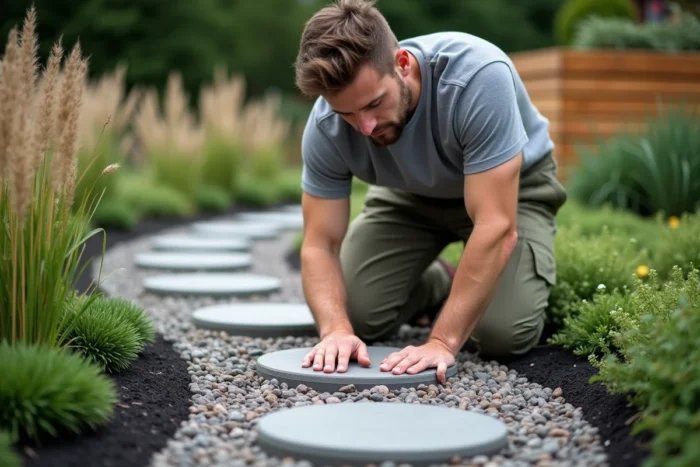
Soil and terrace covering: choosing based on actual use
The material for a terrace should not be chosen from a catalog. It should be chosen based on what you do outside, the local climate, and the time you are willing to dedicate to maintenance.
Wood, composite, or stone: three different logics
Natural wood (treated pine, larch, ipe) ages over time and requires regular treatment. It is suitable for those who are willing to sand and oil it once a year. Composite wood, on the other hand, resists UV rays and moisture without special maintenance. It costs more upfront but pays off over time.
Natural stone remains the most durable choice for an outdoor floor. Sandstone, granite, or slate withstand frost and do not deform. However, some stones can become slippery when wet. Porcelain stoneware, an industrial alternative, offers a good compromise between durability and budget.
Before making a decision, ask yourself a simple question: how many times a month are you willing to maintain this floor? The answer will guide your choice better than any trend.
Structuring a garden with plants suited to the soil
Planting without knowing your soil almost always leads to disappointment. Clay soil retains water and drowns lavender roots. Sandy soil drains too quickly and starves hydrangeas. Observing the garden soil (color, texture, behavior after rain) already provides a reliable indication.
Climbing plants for fences and privacy
Climbing plants solve two problems at once: they dress up an unsightly fence and create a green screen against prying eyes. Here are the most reliable options based on exposure:
- Star jasmine grows quickly in sunny situations, stays green all year, and scents the space from June to September. It needs a solid support (trellis, taut wire).
- Climbing ivy attaches itself to a wall or wooden fence. It tolerates dense shade, making it suitable for north-facing courtyards. It should be pruned once or twice a year to prevent it from colonizing the roof.
- Clematis offers spectacular blooms but requires cool soil at the base. A flat tile placed at the base is enough to retain moisture. It is suitable for east or west exposures.
Combining two climbing plants with different rhythms covers the fence all year round: one evergreen for winter, one deciduous flowering for summer.
Creating shade without waiting ten years
Planting a large-growing tree requires patience. In the meantime, a shade sail stretched between two fixed points (wall, post, existing tree) can protect a dining area in just a few hours. Bioclimatic pergolas with adjustable slats offer finer control but come with a significantly higher budget.
A well-placed shaded area transforms a garden into an outdoor living space, even on a modest surface. Shade determines where people spontaneously settle.
Outdoor lighting and furniture: the details that change usage
A garden that is not illuminated becomes unusable as soon as night falls. A few light points are enough to extend the use of the space into the evening without turning the garden into a parking lot.
The rule is simple: light the paths for safety, the living areas for comfort. Low bollards along a path, a recessed spotlight under a terrace step, a string of lights above a table. Three well-placed light sources are better than ten glaring floodlights.
Garden furniture follows the same logic of consistency with use. A table for six people on a four-square-meter terrace makes the space impractical. Measuring the available area before purchasing avoids returns to the store.
- Aluminum is lightweight, does not rust, and is easy to store. Suitable for balconies and small spaces.
- Wrought iron adds character but is heavy. It is suitable for fixed terraces where the furniture stays in place all season.
- Woven resin withstands the elements without maintenance. It is the most versatile material for permanent outdoor use.
A well-designed garden does not need to be large or expensive. It needs to be thought out in the right order: regulations, soil structure, suitable vegetation, and only then decoration and furniture. Each choice made in advance simplifies all subsequent ones.